A massive, coordinated remediation effort has rippled across global digital networks following the sudden identification of critical security vulnerabilities in PHP, one of the primary open-source programming languages underpinning the modern web. Uncovered through sophisticated artificial intelligence scanning tools capable of parsing millions of lines of legacy codebase in seconds, the flaws represent some of the most significant structural weaknesses surfaced in core web infrastructure to date. The disclosure forced cloud operators, web hosting providers, and enterprise technology divisions worldwide to issue emergency software patches, temporarily take services offline, and evaluate their exposure to potential system compromise.
Automated Auditing and the Exposure of Legacy Debt
The emergency underlines a fundamental structural shift in how software vulnerabilities are discovered and managed. For decades, legacy programming architectures—many developed in the early days of the commercial internet—have operated reliably in the background of global commerce and public services. Because these core frameworks frequently perform as intended under normal operating conditions, deep structural audits were rarely conducted at scale. The deployment of advanced automated code analysis, however, has systematically disrupted this equilibrium by exposing long-hidden defects that human code auditors overlooked for years.
The Asymmetry of Open-Source Maintenance
This technological capability introduces an intense asymmetry into cyber hygiene and infrastructure defense. While artificial intelligence enables security teams and maintainers to rapidly uncover latent bugs and synthesize remediation code, it simultaneously lowers the threshold for threat actors to discover and exploit identical flaw patterns across thousands of unpatched servers. The window between vulnerability discovery and weaponization has compressed dramatically. Major cloud providers and security agencies reported defensive pre-emption efforts and localized probing activity prior to public disclosure, forcing organizations into rapid, high-stakes patching cycles to secure web application firewalls and core application servers.
The operational friction generated by this wave of disclosures highlights the deep-seated dependency of modern enterprise ecosystems on open-source web stacks. A significant majority of public-facing web applications rely on open-source runtime environments and modular libraries. Many of these foundational assets are maintained by small, non-profit groups or independent developer communities operating with modest financial and personnel resources. When automated tools surface hundreds of high-severity vulnerabilities simultaneously across government databases, commercial platforms, and municipal utility interfaces, the burden of validation and deployment falls onto infrastructure administrators who must balance immediate security requirements against the risk of breaking critical legacy operations.
Systemic Governance for Digital Foundations
National cybersecurity regulators and digital infrastructure ministers have increasingly pointed to this dynamic as an institutional vulnerability. In several jurisdictions, emergency response teams have initiated nationwide auditing programs to catalogue municipal, healthcare, and enterprise reliance on legacy programming frameworks. Initial assessments suggest that hundreds of public-sector systems contain unpatched or outdated software components, exposing administrative functions to potential automated intrusion if updates are delayed. The challenge is exacerbated by custom internal applications built on legacy foundations, where automated patch deployment can unintentionally disrupt core functionality or corrupt critical database structures.
To navigate this expanding operational risk, enterprise leadership and chief information security officers are recalibrating their approach to digital asset management. Relying solely on perimeter defenses or traditional vulnerability management schedules is no longer adequate when machine intelligence can uncover systemic core flaws overnight. Organizations are accelerating the adoption of automated software bills of materials to gain granular visibility into third-party code libraries and dependencies. By mapping software architectures in real time, enterprise IT departments can immediately identify where vulnerable programming engines reside and automate the verification of incoming patches before deploying them across production environments.
Ultimately, the global scramble surrounding legacy web architecture serves as a stark reminder that the digital economy’s foundations require continuous, structured stewardship. As automated auditing tools become standard components of cybersecurity operations, the discovery of dormant structural flaws will become a recurring feature of digital risk management rather than an isolated anomaly. Resilience in this new environment will depend not merely on reactive emergency patching, but on systematic investments in open-source code maintenance, modernization of legacy tech stacks, and coordinated global disclosure protocols capable of matching the speed of automated analysis.
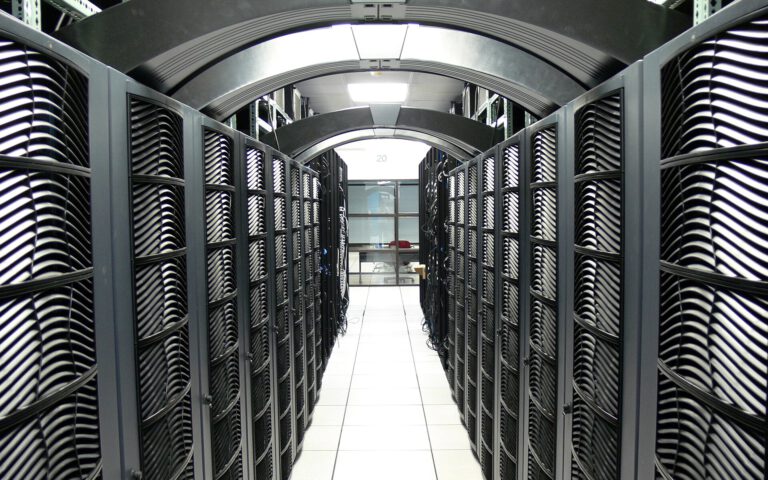
Featured image: Bybbisch94, CC BY-SA 4.0, via Wikimedia Commons.