

The global race for artificial intelligence has encountered a severe structural bottleneck, but the primary friction extends far beyond data center power grid capacity or liquid cooling infrastructure. A deeper allocation crisis is emerging within the global semiconductor supply chain, forcing a stark trade-off between commercial generative software and life-saving biomedical research. As technology conglomerates channel massive capital into consumer-facing foundation models, academic laboratories and biopharmaceutical developers are finding themselves increasingly priced out of the compute capacity required for complex biological modeling.
The Life Sciences Compute Deficit
Recent warnings from senior technology executives have brought this implicit tension into sharp focus. Leadership at Arm, the prominent semiconductor architecture designer, highlighted that critical breakthroughs in oncology and genomic sequencing are being directly delayed by acute chip shortages. Advanced computational biology—such as simulating how specific DNA markers mutate in response to targeted cancer therapies—demands astronomical parallel computing capacity. However, because specialized graphics processing units (GPUs) and high-bandwidth memory (HBM) modules remain constrained by global fabrication limits, high-throughput biomedical research is frequently pushed to the back of the processing queue.
This dynamic creates a profound structural paradox. While commercial tech firms roll out consumer-facing foundation systems such as OpenAI’s GPT-6 Astra, public health researchers and biotechs struggle to secure the raw floating-point operations needed to model complex molecular interactions. The economic incentives governing public cloud providers favor high-margin enterprise software contracts, interactive autonomous agents, and commercial synthesis over long-horizon biological research. Consequently, the raw silicon that could accelerate therapeutic discoveries is overwhelmingly absorbed by conversational interfaces and synthetic media engines.
Market Asymmetry and Infrastructure Rationing
The divergence in hardware allocation reflects a broader market failure in frontier technology deployment. Commercial AI applications generate immediate, recurring subscription revenue, allowing cloud operators to justify massive capital expenditures on frontier server clusters. Conversely, computational biology, drug discovery, and protein structural analysis operate on lengthy regulatory and clinical timelines. Although the long-term societal return on investment for medical breakthroughs is exponentially higher, the private financial return on compute investment favors immediate commercial monetization.
This capital allocation gap is compounded by the sheer scale of modern hardware requirements. Next-generation genomic sequencing and atomic-scale molecular dynamics do not merely require standard cloud server capacity; they depend on specialized tensor processors interconnected by high-speed fabric. When semiconductor foundries operate at absolute physical capacity, the rationing mechanism is driven strictly by purchasing power. Without state intervention or dedicated scientific compute reserves, biomedical research remains subject to the market clearing price established by commercial tech giants.
Multilateral Risk and the Opportunity Cost of Governance
The escalating competition for computational resources coincides with intensifying global calls for technology governance. Speaking before international bodies, United Nations High Commissioner for Human Rights Volker Türk urged global policymakers to establish binding guardrails before unchecked artificial intelligence presents existential risks to human society. Similarly, leading AI scientists have voiced alarm over the speed at which autonomous systems are being integrated into critical digital systems without adequate safety protocols or societal readiness.
Yet, the international governance dialogue often overlooks the substantial opportunity cost enforced by physical hardware constraints. When policy debates focus almost exclusively on containing the societal risks of commercial algorithms, they risk ignoring the systemic harm caused by delaying medical science. The existential risk facing millions of patients is not an unaligned autonomous agent, but the preventable delay of targeted therapeutics caused by silicon scarcity. When high-performance hardware is monopolized by consumer software, humanity incurs a quiet but catastrophic loss in scientific progress.
Sovereign Research Infrastructure as a Policy Mandate
Addressing the genomic compute bottleneck requires a fundamental realignment of national tech policy. To prevent scientific research from becoming permanent collateral damage in the commercial AI boom, sovereign governments must begin treating high-performance biological computing as critical public infrastructure. Several strategic initiatives are becoming imperative:
- Guaranteed Scientific Ring-Fencing: Establishing state-backed computational quotas that reserve a fixed percentage of domestic semiconductor fabrication output and cloud infrastructure exclusively for open-science biomedical research.
- Sovereign Supercomputing Hubs: Investing directly in public-sector compute clusters specifically designed for molecular modeling, genomics, and structural biology, bypassing commercial cloud markups.
- Differential Allocation Frameworks: Developing international standards that incentivize cloud providers to offer tiered pricing and prioritized queueing for public-interest scientific research.
Until institutional mechanisms exist to ring-fence computational power for scientific discovery, the promise of AI-driven medicine will remain constrained by the short-term economics of commercial cloud computing. Mitigating silicon scarcity is no longer just a supply chain challenge for hardware vendors; it is a fundamental governance mandate for global public health.
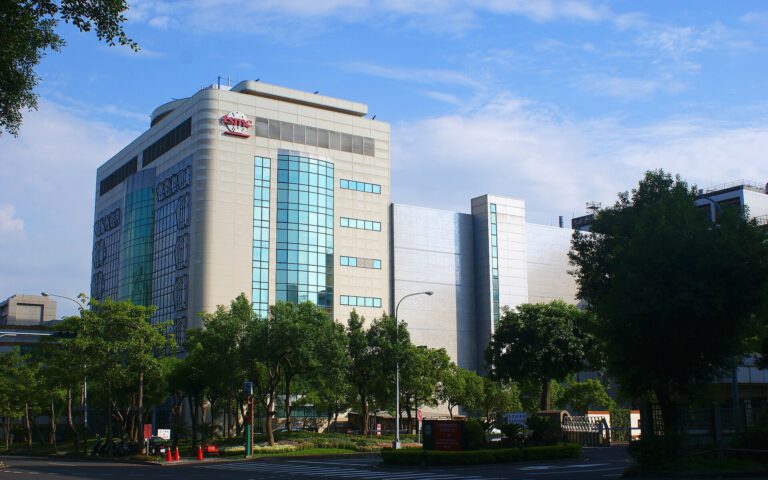
Featured image: Ana Las Heras, CC BY-SA 4.0, via Wikimedia Commons.


.jpg)