Scientific knowledge is abundant, but its ability to travel remains uneven. In June 2026, UNESCO launched an Open Science Platform that combines access to research it produces or supports with dashboards tracking how countries are implementing open-science policies.
The platform is built with the United Nations International Computing Centre and uses CERN’s open-source InvenioRDM repository framework. Its first collection focuses mainly on outputs from UNESCO’s natural-sciences programmes. Over time, UNESCO plans to add research data alongside publications and to make findings more usable through metadata, citation indicators and plain-language summaries.
This may look like another digital library. Strategically, it represents something larger: an attempt to turn openness from a declaration into shared infrastructure. That distinction matters because publishing a PDF online does not necessarily make knowledge discoverable, reusable or durable.
Access is only the first layer
Open science depends on a chain of capabilities. A research output needs a stable location, useful metadata, clear licensing, persistent identifiers, interoperable formats and long-term preservation. Data may also require documentation, software and information about how it was collected before another team can reproduce or extend the work.
When any link is missing, nominally open material becomes difficult to use. A report hidden behind weak search, a dataset without definitions or code without dependencies may be accessible in a legal sense but inaccessible in practice.
UNESCO’s approach joins content with monitoring. Its dashboards cover policy, infrastructure, capacity building and incentives, drawing on the first consultation about implementation of the 2021 UNESCO Recommendation on Open Science. UNESCO reports that roughly three quarters of responding member states have open-science infrastructure at national or institutional level. The more important question is whether those systems connect and serve researchers beyond their best-funded institutions.
The science divide is a capacity divide
A July 2026 UNESCO report on the International Decade of Sciences for Sustainable Development documented 396 initiatives across 79 countries during the decade’s first two years. It also highlighted a severe imbalance: sub-Saharan Africa represents 17.5 percent of the global population but accounts for less than 1 percent of the world’s researchers.
Open access can reduce one barrier, but it cannot by itself close that gap. Researchers also need reliable connectivity, laboratories, compute, data stewardship, grant administration, equipment maintenance and time to participate in international networks. Institutions need people who can curate records, manage rights and preserve outputs after a project ends.
This changes the investment case. Funding a repository without the surrounding workforce can create an empty shell. Funding subscriptions or equipment without improving discovery and collaboration can isolate valuable work. Governments and funders should treat open-science capacity as a portfolio that combines digital infrastructure, institutional skills and research careers.
Incentives determine what gets shared
Researchers respond to how careers and grants are evaluated. If promotion rewards only journal prestige and publication counts, careful documentation, dataset maintenance, software development and public explanation will remain secondary work.
Open-science policy therefore reaches into performance systems. Funders can require data-management plans and budget for stewardship. Universities can recognise reusable datasets, software, replication studies and community engagement. Publishers and repositories can make contribution roles visible so that technical and curatorial labour receives credit.
Measurement requires restraint. A dashboard can reveal progress, but a single target—such as the percentage of outputs marked open—can reward superficial compliance. Better monitoring combines quantitative indicators with evidence about usability, participation, disciplinary differences and local constraints. UNESCO’s 2026 principles for monitoring stress transparency, reproducibility and contextual communication for precisely this reason.
Openness needs boundaries and governance
Not every research object should be published without restriction. Health records, precise locations of endangered species, indigenous knowledge, commercially sensitive findings and dual-use research can create harm if released indiscriminately. Legitimate intellectual-property and contractual obligations also remain.
The operating principle should be proportionate access: as open as possible, as restricted as necessary. Institutions need tiered permissions, ethical review, anonymisation, clear consent and accountable decisions about who can use sensitive material. They also need procedures for correcting or withdrawing records without erasing the scholarly trail.
This is relevant to companies as well as universities. Corporate research teams increasingly collaborate with public laboratories, use open-source software and draw on public datasets. They should map the licences and provenance of external inputs, decide which outputs can be shared, and avoid treating openness as either a blanket giveaway or a source of consequence-free data.
Knowledge infrastructure becomes strategic infrastructure
Shared research systems can reduce duplicated effort, accelerate collaboration and make evidence easier for policymakers and smaller organisations to find. Open-source foundations can also lower dependence on proprietary platforms, although operating them still requires sustained funding, security and technical governance.
The next test for UNESCO’s platform will be adoption: whether records remain current, whether other systems can exchange information with it, whether summaries preserve scientific uncertainty, and whether researchers in underrepresented regions gain meaningful visibility and participation.
The larger lesson is that scientific advantage does not come only from producing knowledge. It also comes from organising knowledge so others can verify, combine and apply it. Open science is moving from an aspiration at the edge of research policy to infrastructure at its centre. Institutions that invest in the full chain—people, standards, incentives and safeguards as well as repositories—will determine how widely that infrastructure creates value.
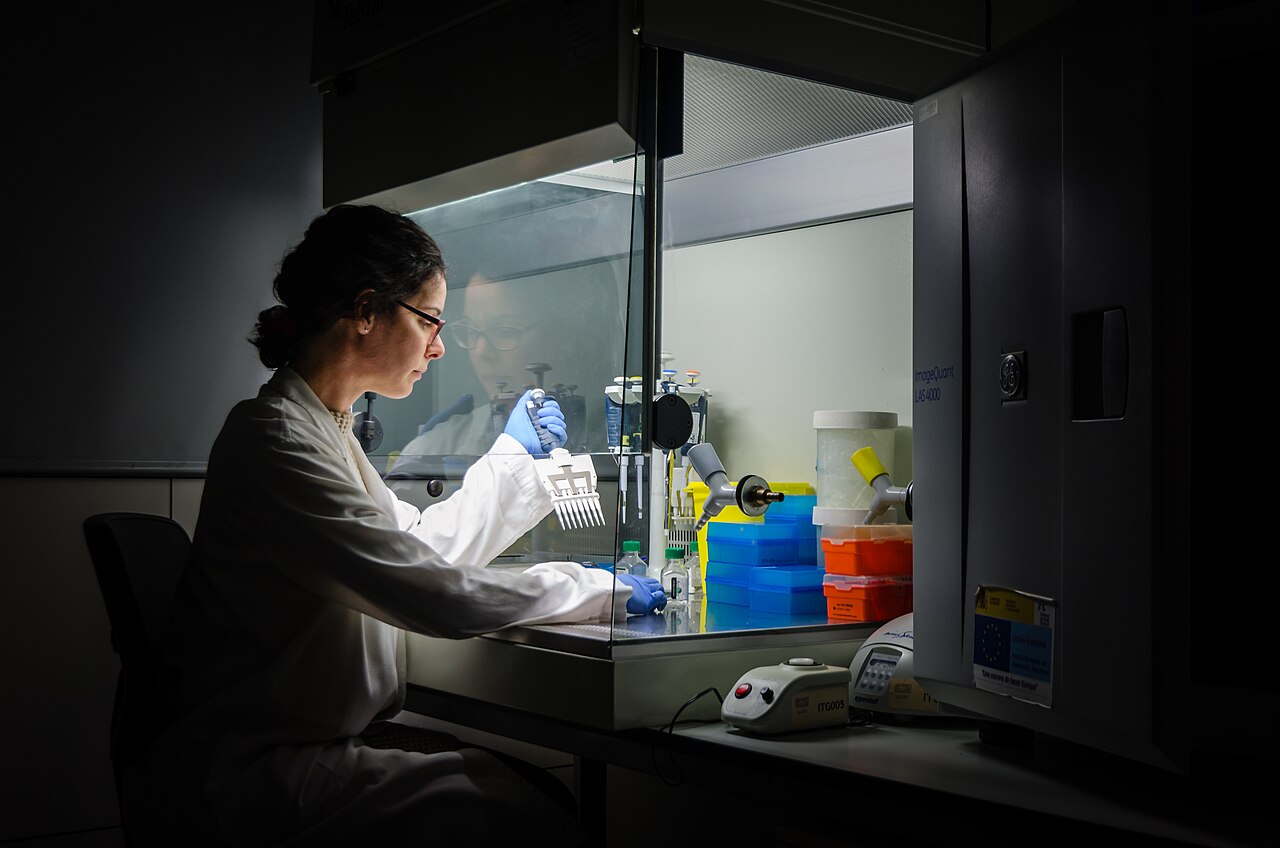
Featured photograph: Alessandro Ventura (Axventura) via Wikimedia Commons, licensed under CC BY 4.0. No material alterations.