
International crisis response mechanisms are confronting an acute operational paradox. While global investigative bodies have developed unprecedented technical capacity to document direct attacks on non-combatants and essential infrastructure, the institutional mechanisms designed to translate those findings into civilian protection are experiencing severe structural friction. Operational reporting from active conflict zones reveals that detailed, verifiable telemetry regarding intentional displacement and infrastructure targeting is failing to halt systemic campaign tactics on the ground.
Recent documentation by specialized UN investigators in Myanmar illustrates this growing divergence. Independent monitors have compiled extensive evidence detailing sustained military airstrikes against residential areas, educational facilities, and makeshift settlements housing internally displaced populations. These actions, accompanied by widespread arbitrary detentions and operational blockades, are not incidental fallout from kinetic maneuvers; rather, they represent deliberate strategy aimed at severing civilian support networks and enforcing territorial control through systemic coercion.
Diagnostic Rigor Versus Enforceable Intervention
The technical capabilities of international investigative bodies have advanced significantly. Satellite imaging, open-source intelligence verification, and ground-level documentation allow human rights bodies to track artillery trajectories, aerial strike patterns, and rapid population movements with high fidelity. However, the operational utility of this diagnostic precision remains strictly bounded by the jurisdictional limits of international governance.
While oversight bodies under the UN Human Rights Council assemble rigorous legal dockets detailing grave violations of international humanitarian law, the operational enforcement mechanisms—specifically binding Security Council resolutions or targeted multilateral sanctions—remain frequently constrained by strategic rivalries among major powers. Consequently, investigative findings serve primarily as historical records for future transitional justice rather than immediate deterrence against ongoing aggression.
Humanitarian Supply Lines and Operational Attrition
This enforcement deficit directly translates into compounding logistical crises for humanitarian agencies on the ground. In Sudan, persistent combat operations between military factions have generated one of the largest displacement catastrophes in modern history. The destruction of local market networks and agricultural assets has left millions dependent on emergency food distributions, precisely at a moment when global funding allocations for emergency relief are contracting sharply.
Humanitarian organizations face a double operational bind:
- Physical Access Blockades: Fighting along major transit corridors prevents the safe movement of relief convoys, isolating cut-off communities and stranding emergency supplies at regional hubs.
- Financial Resource Depletion: Severe capital deficits within international relief budgets force aid agencies to prioritize basic survival supplies while curtailing long-term healthcare, sanitation, and shelter programs.
- Infrastructure Degradation: Strategic strikes against bridges, power grids, and water processing facilities compound the difficulty of maintaining stable delivery nodes in disputed territories.
When physical safety cannot be guaranteed and relief operations are subjected to administrative and military blockades, humanitarian intervention degrades from proactive stabilization into reactive, sub-critical aid distribution.
The Erosion of Deterrence in Regional Conflicts
The gap between documentation and enforcement alters the strategic calculations of belligerents in regional disputes. Operational commanders increasingly operate under the assumption that the diplomatic and reputational costs of targeting civilian infrastructure are negligible when weighed against immediate tactical objectives. As a result, non-combatant populations and humanitarian access routes are systematically converted into tactical leverage points during long-term conflicts of attrition.
This dynamic extends beyond formal state armies. Irregular militias, non-state armed groups, and paramilitary formations utilize localized violence against civilians—such as land grabs, illegal checkpoints, and destruction of agricultural property—to reshape demographic realities in disputed zones. The lack of an immediate, ground-level multilateral response validates these coercive strategies, incentivizing further escalation across adjacent operating theaters.
Recalibrating Multilateral Protection Frameworks
Addressing the collapse of civilian protection requires restructuring how international bodies link intelligence gathering with emergency field operations. Relying solely on post-hoc legal documentation is insufficient to protect vulnerable populations in rapidly expanding conflict zones. Institutional reform must focus on establishing rapidly deployable, neutral humanitarian corridors backed by robust diplomatic guarantees and direct monitoring mechanisms.
Furthermore, international donor states must realign emergency funding commitments to guarantee baseline operational capabilities for frontline aid providers. Without sustained, non-earmarked funding and binding enforcement mechanisms to penalize intentional strikes on civilian supply lines, global humanitarian institutions will remain perpetually overburdened, operating as passive chroniclers of preventable human displacement.
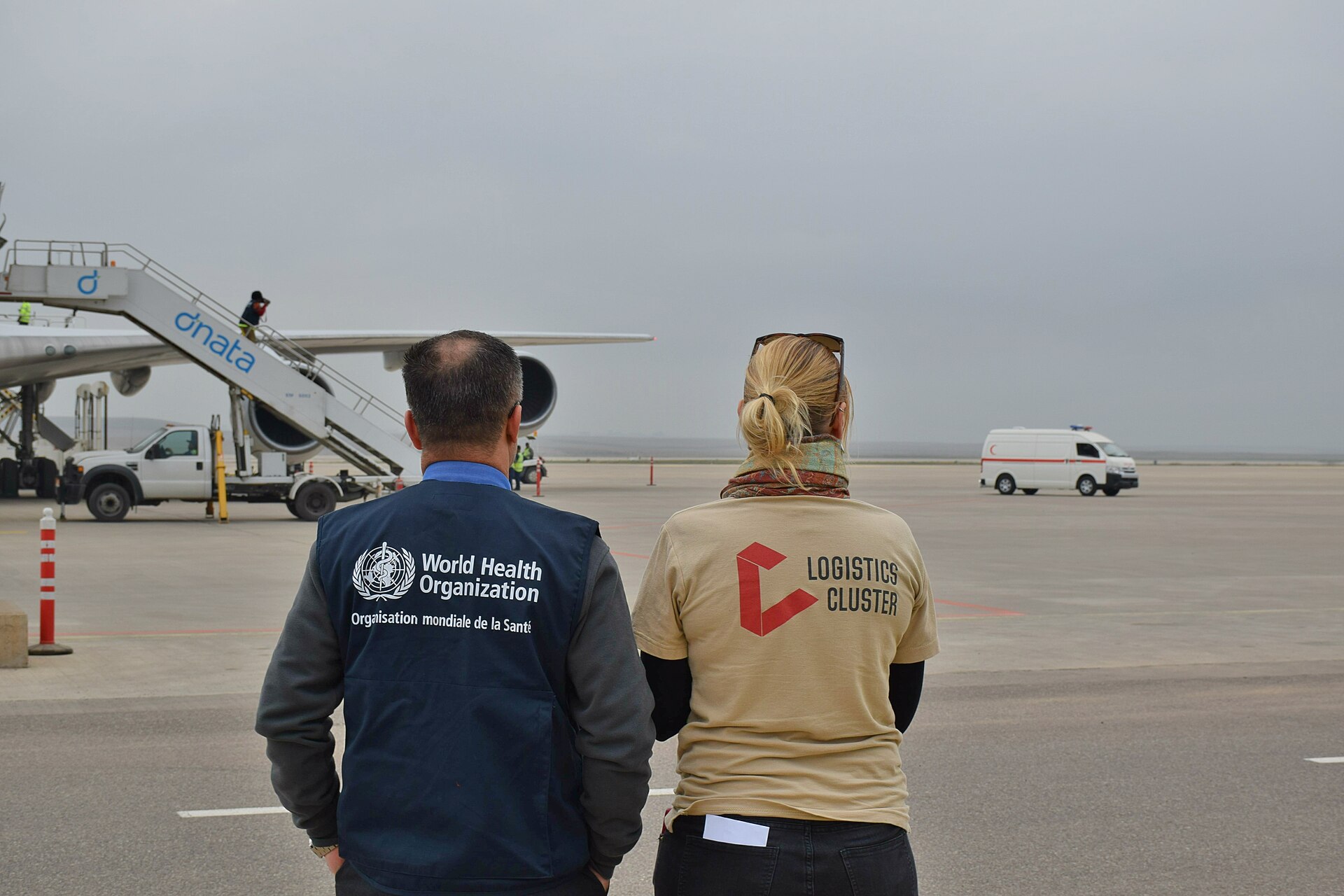
Featured image: Joseluispaulinc, CC BY-SA 4.0, via Wikimedia Commons.