The scale of contemporary climate disruptions is forcing public safety agencies and municipal administrations to reassess the operational boundaries of emergency relocation. As severe weather phenomena grow in frequency and intensity, civil protection infrastructure designed for localized or sequential crises is being stretched across multiple theaters simultaneously. From mass evacuations in major economic corridors to rapid mobilization in remote regions, emergency managers face unprecedented logistics demands that challenge existing response protocols.
In eastern China, local authorities moved more than one million residents away from vulnerable coastal zones and low-lying urban areas as Typhoon Dolphin reached the mainland. The landfall, which brought heavy rainfall and sustained high winds across key commercial hubs including Shanghai, necessitated an enormous deployment of transport fleets, shelter operations, and civil defense personnel. Executing relocation on this scale in heavily populated metro zones demands seamless coordination across rail networks, municipal transit, and emergency power systems, illustrating how high-density regions must operate when primary transport links are threatened.
Concurrently, in western Canada, public safety officials in British Columbia issued urgent directives as the Bald Range wildfire expanded rapidly across tens of square miles. Raging out of control through forested terrain, the blaze forced immediate evacuations, cut off primary road access, and overwhelmed regional firefighting resources. The tragedy of local casualties underscores the operational risk when rapidly spreading wildfires intersect with rural infrastructure networks, where alternative routes are scarce and response windows are compressed into hours.
The Operational Bottlenecks of Concurrent Crisis Operations
When extreme atmospheric events occur concurrently or in rapid succession across distinct geographic zones, the structural assumptions underlying global disaster management are called into question. Historically, national civil defense models relied on mutual aid agreements, allowing neighboring regions to share emergency personnel, heavy machinery, and emergency shelter assets. However, as multiple regions experience severe disruptions simultaneously, the availability of reserve equipment and specialized personnel diminishes rapidly.
This reality exposes several critical pressure points for public sector administrators and enterprise resilience teams:
- Transport Network Capacity: Arterial highways and regional transit systems can quickly become congested or impassable, restricting both the outflow of evacuees and the inbound movement of emergency services.
- Supply Chain and Resupply Continuity: Sustaining displaced populations requires robust logistics for food, potable water, medical supplies, and temporary power generation, testing regional warehouse inventory.
- Inter-Agency Logistics: Managing multi-jurisdictional evacuations demands synchronized real-time data sharing across municipal, provincial, and national command structures.
Rethinking Civil Defense Infrastructure and Emergency Planning
The convergence of urban typhoon management in East Asia and widespread wildfire suppression in North America demonstrates that emergency readiness can no longer be treated as a periodic contingency. Instead, long-term operational resilience requires continuous capital allocation toward flexible, rapidly scalable civil defense systems.
Upgrading Municipal Relocation Hubs
Traditional municipal planning often assumes that public assembly points and civic structures can absorb displaced residents without major upgrades. Modern emergency management standards are shifting toward designated resilience hubs equipped with independent power microgrids, satellite communications, and high-capacity water filtration systems. These facilities ensure that administrative command centres remain operational even when primary utility grids experience widespread outages.
Strengthening Rural and Perimeter Defenses
For non-urban regions prone to wildfires or flash flooding, the challenge lies in early detection and rapid perimeter containment. Investments in localized warning networks, defensive perimeter buffers, and hardened transport corridors are becoming essential to prevent communities from being isolated during fast-moving climate events.
Strategic Implications for Public and Private Sector Planning
As governments re-evaluate emergency response frameworks, private enterprises are similarly forced to adapt their operational continuity strategies. Industrial facilities, logistics providers, and corporate real estate managers operating in hazard-prone regions must integrate real-time risk assessment tools into their supply chain scheduling. Relying on static seasonal forecasts is no longer sufficient when weather dynamics can escalate into full-scale regional disruptions within hours.
Ultimately, the events unfolding across eastern China and western Canada reflect a broader systemic shift. Civil protection is evolving from a localized reactive service into a core component of national strategic resilience. Ensuring that supply chains, energy grids, and human populations can withstand simultaneous environmental shocks will determine how effectively regions navigate an era of heightened climatic volatility.
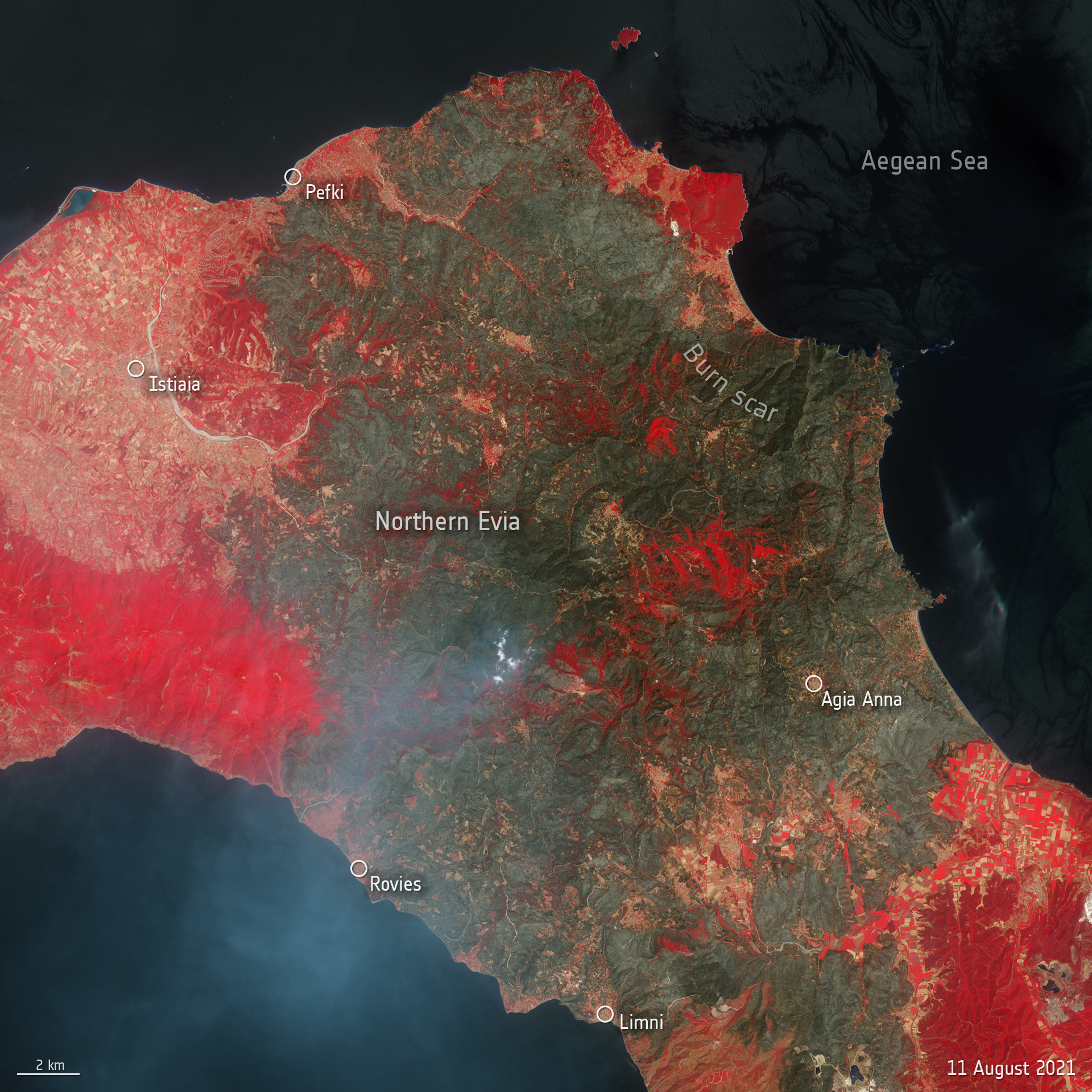
Featured image: European Space Agency, Attribution, via Wikimedia Commons.