The late September 2026 sessions of the United Nations General Assembly have crystallized a profound shift in how middle powers and non-aligned nations view the current geopolitical landscape. Rather than viewing distant conflicts as isolated humanitarian or localized security crises, a growing coalition of states is pointing to the systemic, externalized costs of great-power friction. From disrupted supply chains and inflated energy costs to the fraying of multilateral trade agreements, the message from the global assembly is clear: those far from the battlefields are paying an unsustainable price for wars and diplomatic stalemates they did not cause.
This collective frustration signals a deeper structural transformation. For decades, the global economic architecture was built on the assumption of progressive integration and shared rules. Today, that architecture is buckling under the weight of unilateral sanctions, protectionist industrial policies, and the weaponization of critical trade corridors. For global organizations, this shift marks the end of a predictable operating environment, replaced by a fragmented landscape where geopolitical risk is a permanent, structural tax on operations.
The Rupture of Multilateral Integration
The warning signs of this systemic breakdown were articulated clearly by Canadian Foreign Minister Anita Anand, who cautioned that the international order has entered an era of profound disruption. Addressing the UN General Assembly, Anand highlighted a “rupture” in global governance, driven by major powers increasingly turning away from economic integration. For middle powers like Canada, which have historically thrived within a rules-based multilateral framework, this retreat represents a fundamental threat to economic stability.
When major economies pivot toward protectionism, near-shoring, and unilateral trade barriers, the casualty is the efficiency of global supply chains. Organizations can no longer optimize for cost and speed alone; they must now build redundant, localized networks to hedge against sudden policy shifts. This fragmentation does not merely raise transaction costs; it actively stifles innovation by restricting the cross-border flow of technology, capital, and talent.
The Externalized Costs of Distant Conflicts
While Western nations grapple with the strategic realignment of supply chains, developing and non-aligned nations face more immediate, existential economic pressures. Indian External Affairs Minister Subrahmanyam Jaishankar addressed this disparity directly, warning that countries far removed from active battlefields are being forced to shoulder the economic burden of conflicts in Europe and the Middle East. The compounding effects of fuel hikes, fertilizer shortages, and food insecurity have disproportionately impacted the Global South, reversing years of developmental gains.
This dynamic challenges the traditional concept of neutrality. In a highly interconnected global economy, a localized conflict in a critical agricultural or industrial hub quickly translates into inflationary pressure worldwide. For multinational corporations, this means that operational resilience cannot be achieved simply by avoiding active conflict zones. The ripple effects of these crises—manifested in currency volatility, sovereign debt distress, and shifting regulatory regimes—will inevitably penetrate even the most insulated markets.
The Vulnerability of Global Commons
Nowhere is the intersection of regional conflict and global economic stability more acute than in the world’s maritime choke points. Saudi Arabia’s Foreign Minister recently emphasized that Gulf security is inseparable from global stability, warning that escalating regional tensions threaten international peace, energy security, and the freedom of global navigation. The vulnerability of routes like the Strait of Hormuz and the Red Sea serves as a stark reminder of how quickly regional friction can choke global trade.
When critical transit corridors are threatened, the consequences are immediate:
- Surging Insurance Premiums: Maritime shipping lines face exponential increases in war-risk insurance, costs that are ultimately passed down to cargo owners and consumers.
- Rerouting Delays: Bypassing volatile choke points adds thousands of miles and weeks of transit time to global shipments, disrupting just-in-time inventory models.
- Energy Market Volatility: Even the threat of disruption in the Persian Gulf triggers preemptive spikes in crude oil and liquefied natural gas prices, complicating inflation management for central banks.
The rejection of diplomatic compromises, such as recent discussions surrounding the reopening of key shipping lanes, underscores the persistent volatility of these corridors. As long as regional security remains hostage to broader geopolitical standoffs, global logistics will remain in a state of perpetual vulnerability.
Navigating the New Geopolitical Reality
For corporate strategists and institutional investors, the declarations at the United Nations underscore a critical reality: the era of friction-free globalization is over. The externalized costs of geopolitical rivalry are no longer temporary anomalies; they are permanent features of the global operating environment. To compete effectively in this fragmented landscape, organizations must transition from reactive crisis management to proactive structural adaptation.
This requires a fundamental reassessment of geographic concentration. Diversifying supply chains across multiple politically distinct regions, investing in localized production capabilities, and maintaining robust capital buffers are no longer optional strategies—they are the baseline requirements for survival. As middle powers and non-aligned nations seek new, minilateral partnerships to insulate themselves from great-power friction, businesses must similarly adapt, building flexible, modular operations capable of weathering the ongoing rupture of the global order.
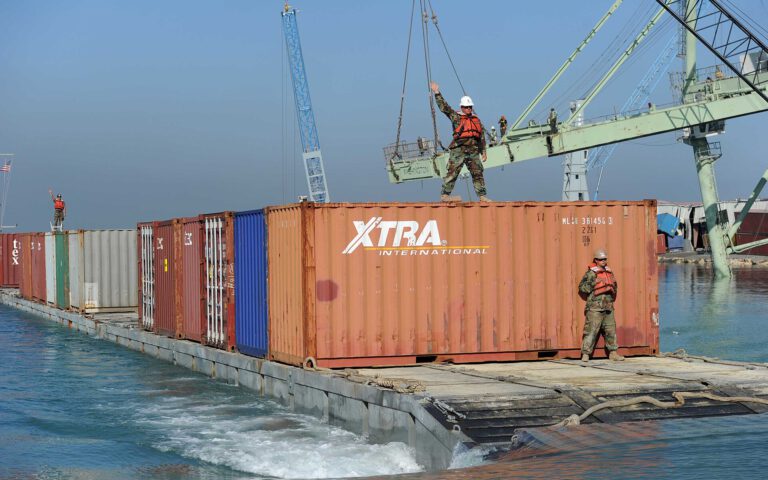
Featured image: LS1 Kelly Chastain, Public domain, via Wikimedia Commons.