The global landscape is currently navigating a period of profound uncertainty, significantly shaped by an assertive and often unilateral foreign policy emanating from the United States. Under the current administration, decisions and declarations are increasingly challenging established diplomatic norms, introducing a new layer of geopolitical risk that reverberates through international relations, strategic alliances, and global financial markets. This shift demands a re-evaluation of how organizations compete and operate, as traditional models for forecasting stability and economic trends struggle to account for rapid, high-impact political interventions.
A recent agreement between the US and Denmark regarding Greenland exemplifies this assertive approach. Following past controversial remarks from the US president concerning the potential annexation of the Danish territory, a deal has now been reached. While welcomed by Denmark and Greenland, the US president’s claim of securing “permanent control over security and all other needs” for the US in the region underscores a strategic posture focused on securing perceived national interests through direct engagement, even if it initially causes diplomatic friction. This episode highlights a willingness to pursue strategic objectives with a directness that can unsettle traditional diplomatic protocols and raise questions about sovereignty and international cooperation in strategically vital areas.
Perhaps even more immediately impactful on global economic stability is the administration’s stance on Iran. Financial institutions, typically reliant on sophisticated models to predict market movements, are now openly admitting their struggles to forecast critical commodity prices. JP Morgan, a major player in global finance, recently stated that it “simply doesn’t know” how to forecast oil prices, directly attributing this unprecedented uncertainty to “Trump’s war with Iran.” This admission is stark. It signifies that the geopolitical tensions, particularly those involving a major oil producer and transit region, are no longer operating within predictable economic “red lines” that might otherwise temper political actions. The prospect of oil prices soaring beyond $100 a barrel, once considered an economic threshold that would prompt de-escalation, appears to be less of a constraint on current policy decisions.
This confluence of events—assertive territorial interest in the Arctic and direct military posturing in the Middle East—paints a clear picture of a foreign policy doctrine that prioritizes unilateral action and perceived national strength over multilateral consensus or the delicate balancing act of global diplomacy. Such an approach inevitably creates a more volatile environment for international trade, investment, and energy security. Businesses operating across borders must contend with the increased likelihood of sudden policy shifts, sanctions, or even military engagements that can disrupt supply chains, alter market access, and fundamentally change the cost of doing business.
The Erosion of Predictability
The core challenge for global organizations lies in the erosion of predictability. For decades, a certain framework of international relations, however imperfect, allowed for a degree of risk assessment based on established alliances, international law, and diplomatic norms. The current era, however, is characterized by a greater willingness to bypass these frameworks, leading to a more opaque and less stable operating environment. This impacts not just large multinational corporations but also smaller enterprises reliant on stable global trade and predictable energy costs.
The difficulty faced by institutions like JP Morgan in forecasting oil prices is a microcosm of this broader challenge. Energy markets are inherently sensitive to geopolitical events, but when the actions of a major global power become less constrained by traditional economic or diplomatic considerations, the variables for prediction multiply exponentially. This forces businesses to build greater resilience into their operations, diversify supply chains, and potentially re-evaluate their exposure to regions prone to sudden geopolitical shifts.
Adapting to a New Geopolitical Calculus
For Lackara Insights’ readership, understanding this evolving geopolitical calculus is paramount. Organizations must move beyond traditional risk management frameworks that often assume a baseline level of international stability. Instead, they need to develop more agile strategies that can respond to rapid shifts in foreign policy, unexpected trade barriers, or sudden escalations of conflict. This includes stress-testing business models against extreme geopolitical scenarios, investing in robust intelligence gathering, and fostering diplomatic engagement at the corporate level where possible.
The implications extend beyond immediate economic impacts. The long-term stability of global institutions, the efficacy of international law, and the very fabric of multilateral cooperation are all being tested. As the US continues to pursue its interests with a pronounced unilateral bent, the rest of the world is compelled to adapt to a new reality where geopolitical risk is not merely an external factor to be managed, but an intrinsic and often unpredictable force shaping the fundamental conditions of global competition and operation.
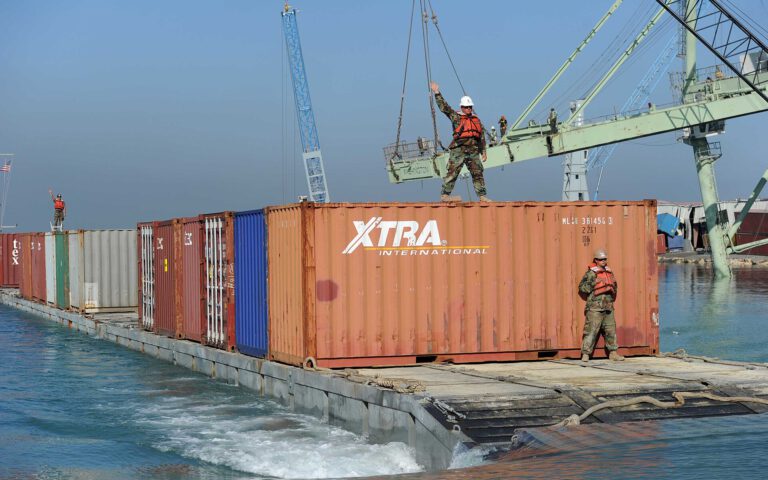
Featured image: Department of Defense. American Forces Information Service. Defense Visual Information Center. 1994, Public domain, via Wikimedia Commons.