
The escalation of the latest Ebola outbreak in the Democratic Republic of the Congo (DRC) into the deadliest in the nation’s history marks a critical juncture for global health security. Driven by the Bundibugyo species—a rarer and historically less-studied variant of the virus—the rapid transmission rate has outpaced traditional containment strategies. In highly volatile regions, particularly the eastern provinces of the DRC, public health interventions do not operate in a vacuum; they are deeply entangled with legacy security dynamics, community suspicion, and fragmented governance.
Controlling highly infectious pathogens in active or post-conflict zones requires more than clinical efficacy and vaccine distribution. It demands a sophisticated understanding of local power structures and the cultivation of community trust. In a notable operational shift, public health agencies and local authorities are increasingly relying on unconventional actors: demobilized former rebel combatants. By transitioning these individuals from armed actors to public health communicators, containment campaigns are attempting to bypass the deep-seated distrust that frequently stymies international and state-led medical interventions.
The Bundibugyo Challenge and Operational Friction
The current outbreak’s severity is compounded by the specific characteristics of the Bundibugyo ebolavirus. Unlike the more common Zaire strain, for which established vaccines and therapeutic protocols exist, the Bundibugyo variant presents distinct diagnostic and clinical hurdles. The lack of widely deployed, strain-specific vaccines means that containment relies heavily on classic epidemiological interventions: early detection, rigorous contact tracing, safe burials, and community-led isolation protocols.
However, executing these protocols in the eastern DRC involves navigating a dense thicket of physical and social barriers. Decades of conflict have left infrastructure severely degraded, making the transport of laboratory samples and medical supplies slow and hazardous. More critically, the historical presence of armed groups and a legacy of state neglect have fostered deep skepticism toward external authority. When medical teams arrive in protective gear, accompanied by state security forces, they are often met with resistance, evasion, or outright hostility. In this environment, traditional top-down communication channels are highly ineffective.
Leveraging Demobilized Combatants for Community Access
To overcome these barriers, public health coordinators are leveraging the social capital and local knowledge of demobilized combatants. These individuals, who once operated within non-state armed groups, possess unique access to marginalized or suspicious communities. Having lived and fought in the remote forested areas where the virus often circulates undetected, they understand the local dialects, cultural sensitivities, and informal communication networks.
The integration of former combatants into public health campaigns serves a dual operational purpose:
- Neutralizing Hostility: Former fighters can act as trusted intermediaries, explaining the reality of the virus and the necessity of medical intervention to communities that would otherwise reject government health workers.
- Navigating High-Risk Geographies: Their familiarity with the physical terrain and local armed factions allows health teams to negotiate safe passage and establish surveillance networks in areas previously deemed inaccessible.
- Socio-Economic Reintegration: Providing demobilized individuals with meaningful, paid roles in crisis response aids their transition to civilian life, reducing the likelihood of armed recidivism while strengthening local health infrastructure.
This strategy represents a departure from historical containment models, which often relied on militarized quarantine enforcement. By utilizing demobilized personnel as information conduits, health authorities are attempting to build a bottom-up defense mechanism that treats community trust as an essential clinical asset.
Strategic Implications for Global Health Governance
The operational lessons emerging from the DRC have broader implications for global health governance in fragile states. As climate change, habitat fragmentation, and geopolitical instability increase the frequency of zoonotic spillovers, future outbreaks are highly likely to occur in contested or ungoverned territories. Traditional international response frameworks, which rely on stable state partners and secure operating environments, are ill-equipped for these realities.
Organizations must adapt by developing flexible, localized operational models. This involves pre-emptively mapping informal power structures, engaging with non-state actors, and integrating peacebuilding and demobilization frameworks directly into epidemiological preparedness plans. The success of these hybrid models depends on maintaining a strict separation between clinical objectives and political-military agendas, ensuring that humanitarian and medical interventions remain neutral and universally accessible.
Ultimately, the crisis in the DRC demonstrates that the containment of deadly pathogens is as much a social and logistical challenge as it is a medical one. By transforming former combatants into agents of public health, responders are demonstrating that the path to epidemiological resilience in conflict zones lies in the creative reconfiguration of local human resources.
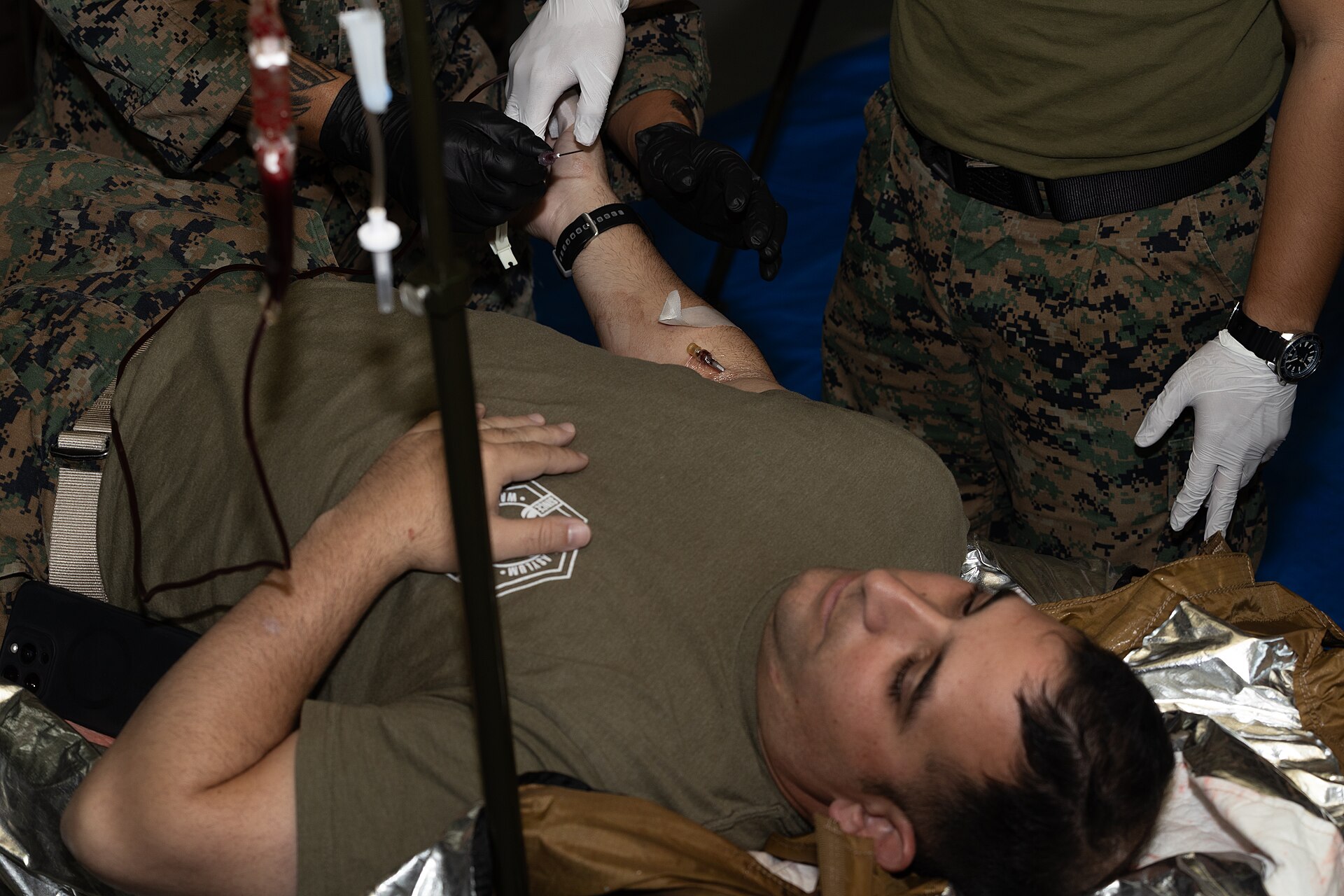
Featured image: U.S. Marine Corps photo by Lance Cpl. Kindsey Calvert, Public domain, via Wikimedia Commons.
.jpg)