A consequential phase in the redesign of international taxation began in New York on 3 August. Governments opened the fifth session negotiating a United Nations Framework Convention on International Tax Cooperation, and for the first time they are expected to work across concrete draft legal text rather than remain primarily at the level of principles and options.
The session runs through 13 August and covers three connected instruments: the framework convention, an early protocol on taxing cross-border services, and another on preventing and resolving tax disputes. Final texts are scheduled for submission to the UN General Assembly in 2027.
No treaty outcome is assured, and the details remain contested. Yet the transition to text matters. Words such as “shall,” “may,” scope definitions and dispute procedures determine how political aspirations become obligations. For multinational businesses and tax administrations, this is the point at which a broad governance debate begins to create operational scenarios.
Taxing rights are the central question
The international tax system was largely built when commercial presence was easier to locate. Digital delivery, remote services, intellectual property and integrated supply chains have made value creation harder to assign to a single jurisdiction. Countries where customers or users are located often argue that existing rules give too much weight to corporate residence or physical presence.
The proposed services protocol could influence how source countries tax payments for services supplied across borders. This is particularly important for economies that import substantial professional, digital and technical services but have limited administrative capacity. Rules that appear abstract at treaty level can affect withholding taxes, contract prices, reporting requirements and the risk of double taxation.
The debate is also about institutional voice. The OECD/G20 Inclusive Framework has produced major changes, including the global minimum tax, while the UN process gives every member state a formal seat in an intergovernmental negotiation. These tracks need not be treated as mutually exclusive, but overlapping standards could raise complexity if their definitions and procedures diverge.
Dispute resolution will determine whether rules are usable
Reallocating taxing rights without credible dispute prevention could leave companies exposed to competing claims from multiple jurisdictions. Traditional mutual-agreement procedures can be slow and resource-intensive, especially for smaller administrations. Mandatory arbitration, however, is politically sensitive because governments may view it as limiting sovereignty or favouring parties with greater technical resources.
A workable system must balance certainty, accessibility and national authority. It also needs safeguards for confidentiality, transparent timelines and mechanisms that do not require every country to maintain a large specialist team. The design of the dispute protocol may therefore be as economically important as the substantive allocation rules.
Companies should prepare without predicting the treaty
Businesses should not assume that today’s drafts will become final law. They should also avoid waiting until ratification to understand exposure. Tax, finance and legal teams can begin mapping cross-border service flows, contract terms, permanent-establishment positions, withholding obligations and recurring disputes.
Scenario planning should identify where a change in source-country rights would alter effective tax rates or compliance processes. Data architecture deserves particular attention. Authorities increasingly expect consistent information across country-by-country reports, transfer-pricing documentation, invoices and financial statements. Fragmented systems can turn a manageable policy change into a costly implementation problem.
Boards should also distinguish legitimate preparation from aggressive restructuring. Moving arrangements solely in anticipation of uncertain rules can create new legal, reputational and operational risks. The durable capability is the ability to explain where activities occur, how value is created and why profits are allocated as they are.
Implementation capacity cannot be an afterthought
A convention will achieve little if administrations cannot apply it or taxpayers cannot comply at reasonable cost. Developing countries need technology, skilled personnel and access to information, while all jurisdictions need interoperable filing and exchange systems. Simplification should be treated as economic infrastructure, not a concession.
The OECD’s continuing work on central filing for the global minimum tax illustrates the practical challenge: even agreed rules require functioning portals, exchange relationships and coordinated relief when systems are delayed. A UN convention will face the same gap between diplomatic agreement and daily administration.
The fifth session is therefore important less because it will settle every question than because it reveals where governments are willing to encode compromise. International taxation is moving from competing narratives toward sentences that can be amended, adopted and eventually enforced. Organisations that follow the text now will be better prepared for the operating environment that follows.
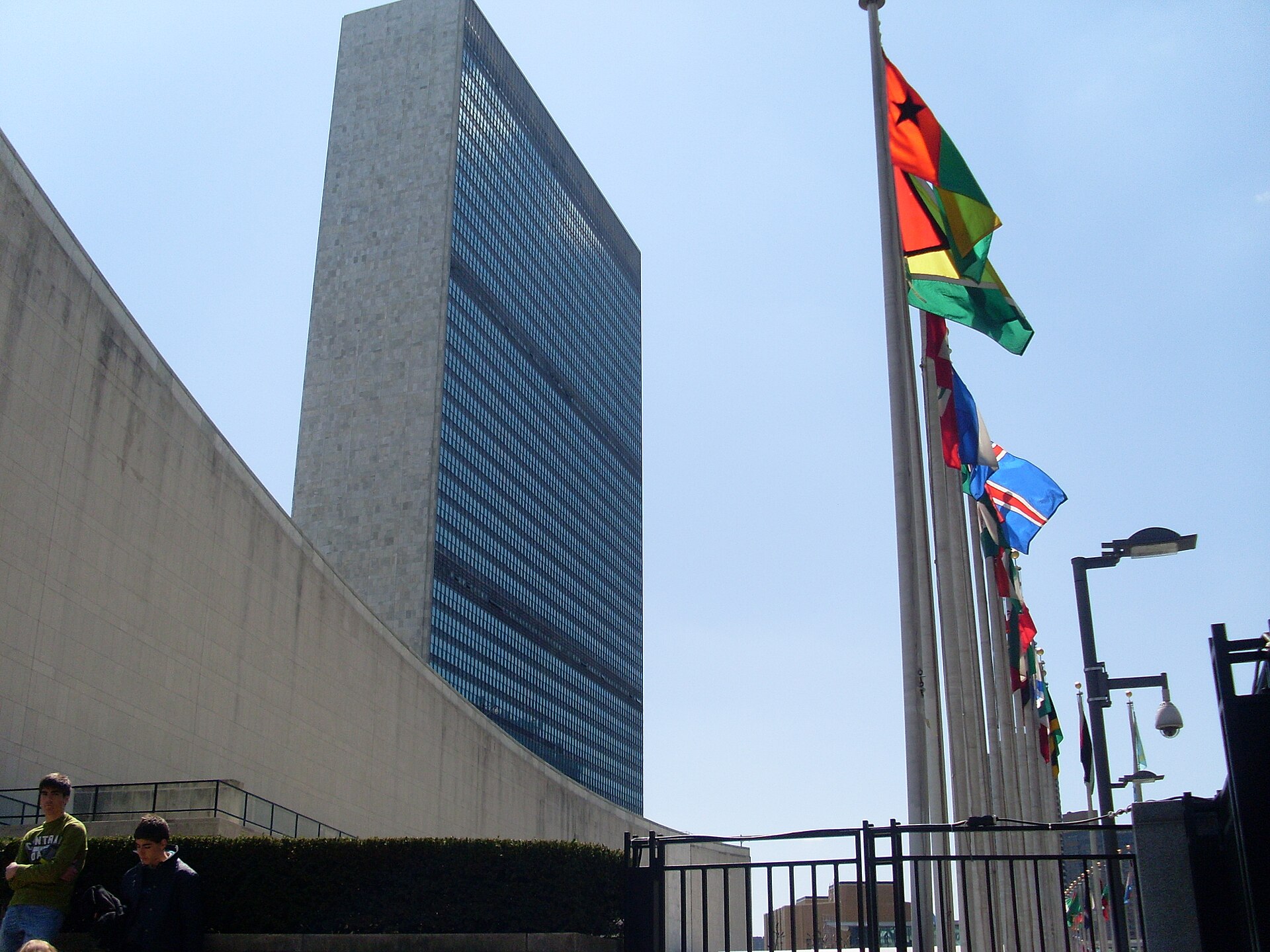
Featured photograph: Dendodge via Wikimedia Commons, released into the public domain.