
For more than a decade, the digital economy operated under a powerful, shared assumption: that cloud computing was an effectively infinite, cheap, and rapidly scaling commodity. This premise birthed the “all-you-can-eat” subscription model, where consumers and enterprises alike paid flat monthly fees for unlimited storage, seamless video streaming, and remote processing power. But as the physical infrastructure supporting the digital world collides with resource limits and the insatiable energy demands of artificial intelligence, this era of digital abundance is coming to an abrupt end. Tech giants are quietly transitioning to a new paradigm of metered access, rationing, and strict resource allocation.
The End of the Unlimited Subscription
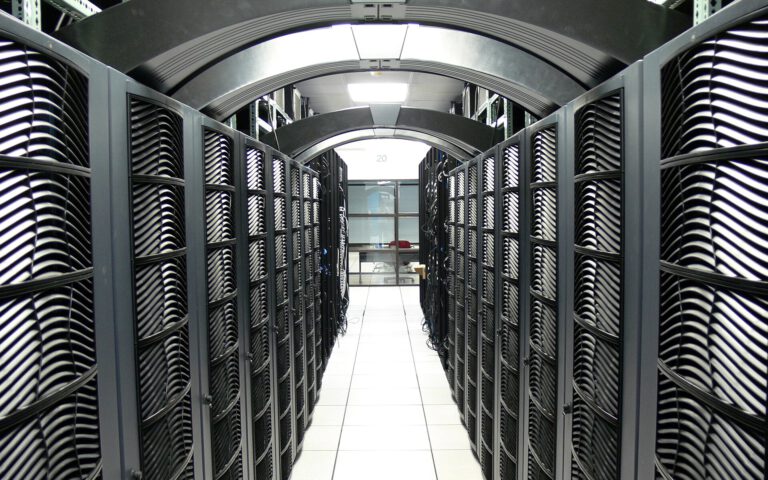
The clearest signal of this structural shift came from Microsoft’s gaming division. Xbox announced that it is capping cloud gaming at 15 hours per month for its Game Pass subscribers, attributing the decision directly to the rising operational costs of cloud infrastructure. For years, cloud gaming was marketed as the ultimate realization of hardware-free play, allowing users to stream resource-intensive titles directly from remote servers. However, the physical reality of maintaining high-performance server racks, cooling systems, and low-latency network pipelines has made unmetered consumer streaming economically unsustainable.
This is not an isolated corporate adjustment; it is the vanguard of a broader industry retrenchment. As the capital expenditure required to build and maintain cutting-edge data centers skyrockets, technology platforms are realizing they can no longer subsidize high-bandwidth, low-margin consumer services. The “infinite cloud” was always an illusion sustained by cheap capital and underutilized server capacity; today, both of those enabling conditions have vanished.
The AI Boom and the Compute Squeeze
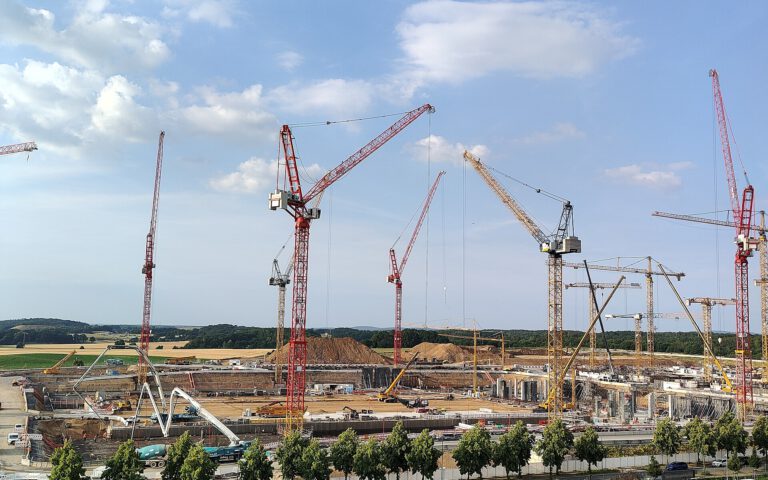
The primary driver of this infrastructure squeeze is the global rush to deploy artificial intelligence. AI workloads—particularly the training and inference of large language models—require orders of magnitude more computational power and electricity than traditional cloud services. This demand has triggered an unprecedented data center construction boom worldwide. In Australia, for example, data centers are expanding rapidly to capture the AI market, drawing significant investment but also sparking intense public debate over their long-term societal and environmental costs.
Critics in Australia and other hosting nations point out that while these massive facilities generate substantial corporate revenue, they provide relatively few local jobs once built, while placing immense strain on public utilities. Data centers require continuous, high-voltage electricity and millions of liters of water for cooling, often competing directly with residential areas and agricultural sectors for scarce resources. As local grids struggle to accommodate this load, the cost of power rises, and these expenses are inevitably passed back to the technology companies—and ultimately, to the end users.
The Crowding-Out of Consumer Services
This physical bottleneck has created a high-stakes prioritization problem within the tech sector. When server capacity is finite and energy is expensive, companies must allocate their compute resources to the highest-margin activities. A graphics processing unit (GPU) or high-performance tensor processing unit (TPU) is far more profitable when leased to an enterprise training a proprietary AI model than when dedicated to rendering a video game for a consumer paying a flat subscription fee.
Consequently, consumer-facing cloud services are being systematically crowded out or priced upward. We are entering an era of “compute rationing,” where every gigabyte of data transferred and every hour of processor time utilized will be strictly accounted for and billed. The transition from flat-rate subscriptions to metered, tiered, or capped models is the direct economic consequence of this resource competition.
The Geopolitical and Regulatory Backlash
As the physical footprint of the cloud becomes more visible, it is attracting intense regulatory scrutiny. Governments are beginning to view data centers not merely as engines of digital innovation, but as heavy industrial facilities that threaten national decarbonization targets and grid stability. In regions with fragile energy grids or chronic water scarcity, the expansion of these facilities is becoming politically volatile. This regulatory friction will further constrain supply, driving up the cost of compute and accelerating the shift toward metered consumer services.
For organizations and consumers alike, this transition demands a fundamental reassessment of digital architecture. The assumption that software can be poorly optimized because hardware will always scale cheaply is no longer viable. Efficiency, local processing, and edge computing are returning to the forefront of technical design as the cost of relying on centralized, remote servers continues to climb.