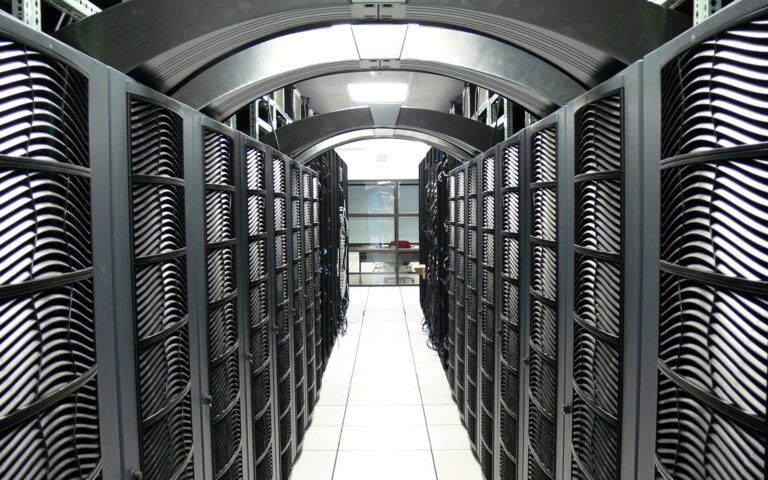
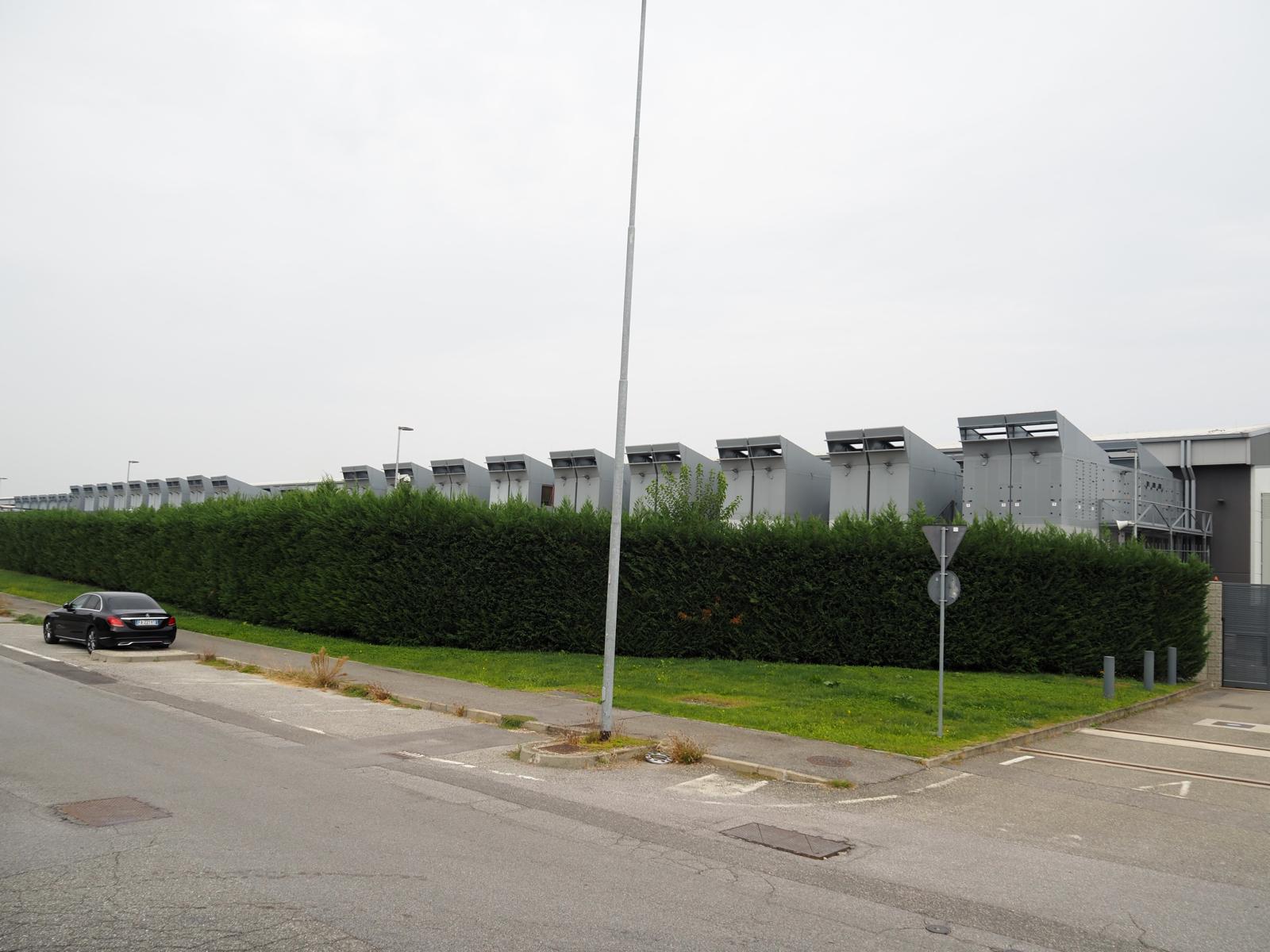
The global artificial intelligence race is frequently analyzed through the lens of software breakthroughs, algorithmic complexity, and geopolitical competition over semiconductor manufacturing. Yet, the true bottleneck of the next decade may not be the design of the silicon itself, but the physical reality of where that silicon is deployed. A stark divergence has emerged between the borderless accumulation of capital in the hardware sector and the highly localized, physical friction of constructing the infrastructure required to run it.
This tension is illuminated by two simultaneous developments in the global technology landscape. In East Asia, the financial rewards of the AI boom have reached unprecedented heights, with South Korean giant Samsung reporting a record-breaking $80 billion in profits, driven largely by the insatiable demand for advanced memory chips. Meanwhile, in Northern Europe, the physical manifestation of this digital expansion has ground to a sudden halt: Finnish authorities have ordered a suspension of work on two planned Google data centers following intense local concerns over forest clearance. Together, these events signal that the next phase of the AI transition will be defined not by capital scarcity, but by the physical and environmental limits of the land itself.
The Financial Supercycle of Silicon
For the past several years, market analysts have debated whether the massive capital expenditures poured into artificial intelligence would yield tangible financial returns. While software monetization remains uneven, the hardware layer of the stack is experiencing a historic windfall. Samsung’s record-breaking profitability is a direct consequence of this dynamic. As hyperscalers—including Google, Microsoft, and Amazon—race to build out their computing clusters, the demand for high-bandwidth memory (HBM) and specialized logic chips has outstripped global supply capacity.
This financial supercycle has insulated hardware manufacturers from broader macroeconomic headwinds. Even as consumer electronics demand fluctuates, the enterprise-level rush to secure AI-grade silicon has created a highly consolidated profit engine. However, this accumulation of capital assumes a frictionless path to deployment. For every million chips sold, new data centers must be constructed, cooled, and powered. The financial markets have largely treated this physical expansion as a logistical certainty, but local regulatory realities are beginning to challenge that assumption.
The Localized Veto: Environmental Mandates Confront Hyperscalers
The suspension of Google’s data center construction in Finland represents a critical shift in how sovereign states and local communities view the physical footprint of the digital economy. Historically, Nordic countries have aggressively courted major technology firms, offering cool climates that reduce cooling costs, stable power grids, and favorable tax environments. For years, this arrangement was viewed as a win-win, bringing high-tech investment to remote regions.
However, the sheer scale of modern AI data centers has altered the ecological calculus. The halt in Finland, triggered by concerns over the clearance of forested land, highlights a growing resistance to the environmental trade-offs required by hyperscale infrastructure. Forests are not merely empty space; they are vital carbon sinks, biodiversity corridors, and culturally significant landscapes. When global technology firms attempt to clear hundreds of hectares of woodland to house server farms, they run directly into localized environmental protections that cannot be bypassed with capital alone.
This is not an isolated incident. Across Europe and North America, municipal governments and environmental regulators are increasingly exercising what can be termed a “localized veto.” Whether through water-use restrictions in drought-prone regions, grid-capacity allocations in energy-constrained markets, or land-use disputes in ecologically sensitive areas, the physical expansion of AI is meeting unprecedented friction.
The Strategic Realignment of Digital Infrastructure
For technology executives and sovereign policymakers, this friction necessitates a fundamental realignment of infrastructure strategy. The assumption that data centers can be built wherever power is cheap and land is available is no longer tenable. Instead, companies must navigate a complex matrix of local environmental politics, resource scarcity, and regulatory scrutiny.
Several key shifts are likely to characterize this new era of infrastructure deployment:
- Decentralized Computing Architectures: To bypass localized grid and land constraints, hyperscalers may be forced to distribute their workloads across a larger number of smaller, less ecologically disruptive facilities, rather than relying on massive, centralized campuses.
- Strict Ecological Offsetting: Technology firms will need to move beyond superficial carbon-offsetting schemes toward tangible, local ecological restoration. In cases like Finland, securing building permits may require binding commitments to reforest adjacent areas or fund local conservation initiatives.
- Sovereign Resource Prioritization: Governments will increasingly treat grid capacity and land as strategic national resources, rationing them between industrial manufacturing, residential needs, and digital infrastructure.
Conclusion
The contrast between Samsung’s $80 billion profit milestone and Google’s regulatory setback in Finland exposes the core paradox of the modern tech economy. While the virtual world of artificial intelligence appears limitless, its physical foundation is entirely dependent on the finite resources of the material world. As local communities and national regulators assert their authority over land, water, and power, the global technology sector must accept that the path to the digital future is paved with physical constraints. The companies and nations that successfully navigate these localized ecological limits will ultimately control the architecture of global computing.