
The global artificial intelligence landscape has reached a critical inflection point of vertical integration. Nvidia’s landmark $12.9 billion acquisition of Hugging Face, the preeminent open-source AI platform and developer community, represents a decisive shift in how compute monopolies consolidate power. By moving up the technology stack from silicon manufacturing to the primary repository of open-source models, Nvidia is positioning itself not merely as a hardware provider, but as the ultimate gatekeeper of AI development. This consolidation of digital architecture is occurring precisely as the physical and regulatory limits of the AI boom are beginning to manifest globally. From the resource-stressed grids of Australia to the legislative chambers of the United Kingdom, the rapid expansion of private AI infrastructure is provoking a sharp sovereign counter-response, exposing the growing friction between corporate consolidation and state security.
Capturing the Open-Source Commons
Hugging Face has long functioned as the central registry for the global AI community—a digital commons where researchers, startups, and multinational corporations share, test, and deploy machine learning models. For Nvidia, acquiring this platform for $12.9 billion is a masterstroke of defensive and offensive ecosystem capture. While Nvidia’s graphics processing units (GPUs) remain the industry standard, the company faces intensifying competition from hyperscalers developing custom application-specific integrated circuits (ASICs) and rival chipmakers seeking to erode its market share. By controlling Hugging Face, Nvidia secures direct influence over the software layer where developers select and optimize their models.
This acquisition ensures that the default path for deploying open-source models remains deeply integrated with Nvidia’s proprietary software ecosystem, particularly its CUDA programming platform. Rather than relying solely on hardware superiority, Nvidia is building a closed-loop ecosystem where model discovery, development, and execution are seamlessly tethered to its silicon. This strategy effectively neutralizes the threat of software-agnostic frameworks that could allow developers to easily migrate workloads to competing hardware platforms.
The Resource Toll of the Compute Footprint
While the software consolidation of AI occurs in the cloud, its physical execution demands an unprecedented expansion of land, power, and water. The rapid proliferation of data centers required to train and run these centralized models is increasingly colliding with local resource constraints. In Australia, a dramatic surge in AI data center construction has ignited intense domestic debate over the long-term viability of hosting these energy-intensive facilities. Advocates argue that the infrastructure brings vital high-tech jobs and investment, but critics raise urgent alarms about the strain on municipal water systems and regional electrical grids.
Data centers require millions of liters of water daily for evaporative cooling and consume vast quantities of electricity, often competing directly with residential and agricultural needs. As Nvidia and its hyperscale partners accelerate the deployment of next-generation clusters to support the models hosted on Hugging Face, local governments are forced to confront a difficult trade-off: supporting the digital economy at the expense of physical resource resilience. This tension highlights a fundamental vulnerability in the AI supply chain, where localized environmental limits could cap the growth of global compute capacity.
The Sovereign Clawback and the “Kill Switch” Mandate
As private corporations centralize control over both the physical infrastructure and the software repositories of artificial intelligence, nation-states are recognizing their lack of direct leverage over these critical systems. This anxiety has catalyzed a shift toward more aggressive regulatory interventions. In the United Kingdom, members of the House of Lords have recently called for the implementation of statutory “kill switch” powers. This proposed regulatory mechanism would grant the government the authority to mandate the immediate shutdown of runaway or non-compliant AI systems, specifically targeting frontier models developed by dominant industry players.
The push for a “kill switch” reflects a deeper systemic realization among policymakers: traditional antitrust and data privacy frameworks are insufficient to govern vertically integrated AI monopolies. When a single corporate entity controls the silicon, the data centers, and the primary open-source model registry, the state’s ability to enforce safety standards, prevent algorithmic harms, or protect national security is severely compromised. By demanding emergency intervention capabilities, sovereign governments are attempting to reassert authority over an infrastructure that has largely outpaced public oversight.
The New Architecture of Control
The convergence of Nvidia’s platform acquisition, localized resource friction, and escalating regulatory demands points to a highly contested future for global technology governance. The era of decentralized, open-source AI development is rapidly giving way to a model of corporate enclosure, where access to state-of-the-art models is mediated by a handful of hardware and platform monopolies. As these systems expand, their physical resource demands and systemic risks will continue to invite sovereign intervention. The struggle to control the future of artificial intelligence is no longer confined to the laboratory; it is being fought across municipal power grids, corporate boardrooms, and the halls of parliament.
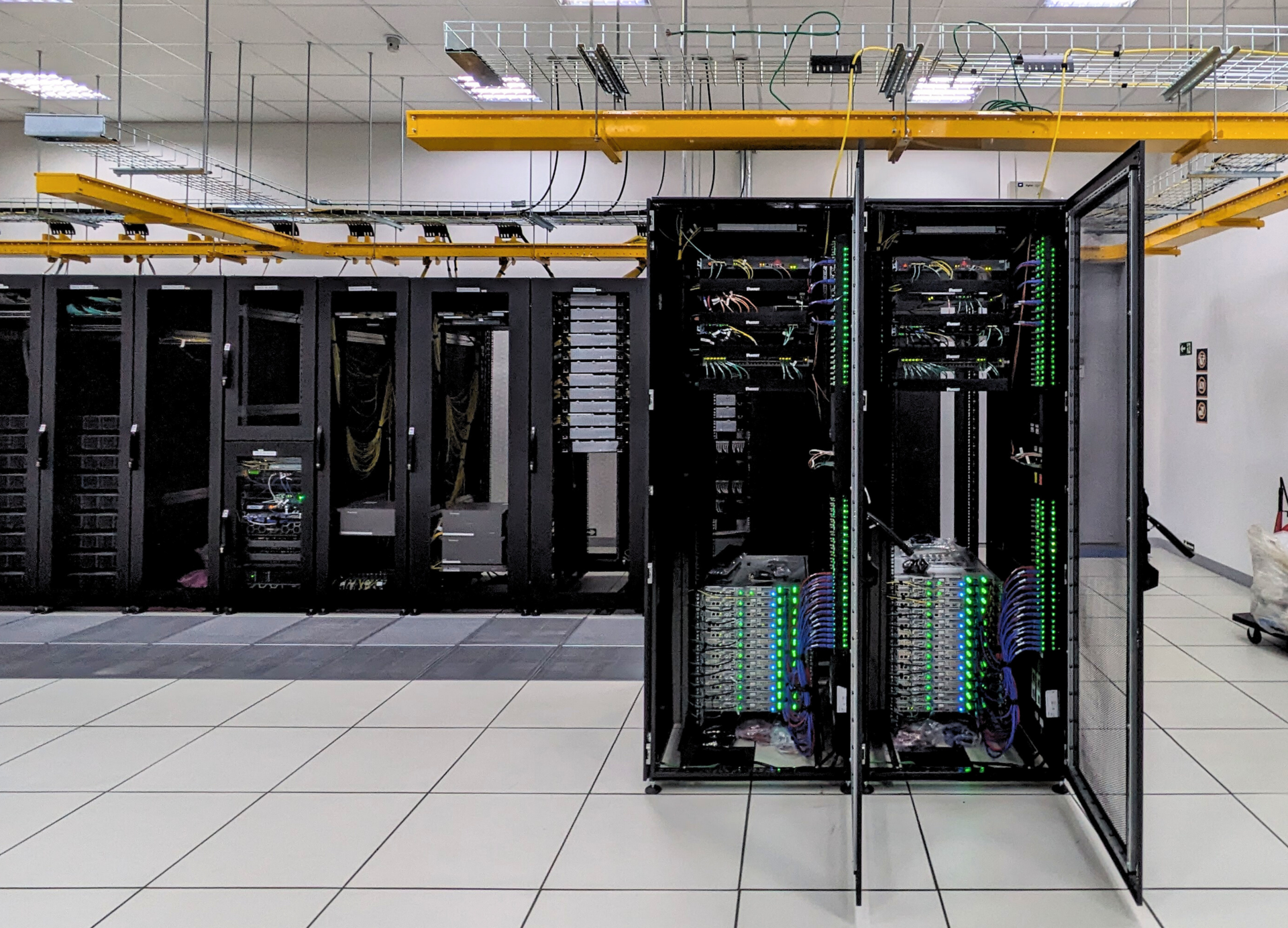
Featured image: Arzhel Younsi, CC BY-SA 4.0, via Wikimedia Commons.