The World Health Organization’s first Global Status Report on Cancer, released in July 2026 with the International Agency for Research on Cancer, presents two realities at once. Prevention, diagnosis and treatment have advanced substantially. Yet access to those advances remains deeply unequal, and the annual number of new cases is projected to approach 35 million by 2050 without stronger action.
WHO estimates 20.6 million new cases and close to 10 million deaths annually today. The contrast in breast-cancer survival is especially revealing: five years after diagnosis, about 87% of women in high-income countries are alive, compared with roughly 42% in low-income countries.
This is not evidence that discovery has failed. It shows that innovation creates value only when a health system can deliver it. Laboratories, trained personnel, referral pathways, procurement, transport, registries and financial protection are as consequential as a new diagnostic or medicine.
The pathway matters more than a single intervention
Cancer control is a sequence: prevention, recognition, diagnosis, staging, treatment, follow-up, palliative care and survivorship support. A gap at any stage can erase the benefit of strength elsewhere. Screening without confirmatory diagnostics produces anxiety and delay. Equipment without maintenance or specialists becomes idle capacity. Treatment that requires repeated long-distance travel may be inaccessible even when nominally available.
WHO’s report therefore calls for cancer control to be embedded within stronger health systems and universal health coverage. The objective is not to build a separate vertical service for every tumour type, but to strengthen capabilities that serve many conditions: pathology, imaging, surgery, medicines management, primary care and reliable referral.
Geography remains a design constraint. Rural patients may need repeated travel or temporary relocation because diagnostic and treatment services are concentrated in cities. Decentralising every advanced service is unrealistic, but systems can move selected screening and follow-up closer to communities while coordinating transport and referral to specialised centres.
Financial protection is a clinical enabler
The cost of cancer extends beyond hospital invoices. Families lose income, pay for transport and accommodation, rearrange care responsibilities and sometimes sell productive assets. These pressures can delay diagnosis, interrupt treatment and shape outcomes.
Health financing should therefore measure whether people can complete a care pathway, not only whether a procedure is covered. Travel support, paid leave, social assistance and caregiver services can be part of effective cancer control. They are protections, but they also improve the performance of clinical investment by reducing avoidable abandonment and delay.
For employers, the issue extends beyond insurance benefits. Flexible work, privacy-respecting communication and structured return-to-work processes can preserve skills and household stability. Policies should be predictable enough that employees do not have to negotiate support during a crisis.
Data gaps distort priorities
Cancer registries reveal incidence, stage, survival and geographic inequality. Without dependable data, countries can buy equipment or medicines without knowing where the largest gaps occur or whether programmes improve outcomes. WHO’s broader 2026 health statistics also show that many countries lack timely, high-quality cause-of-death reporting.
Investment in registries, pathology records and interoperable health information is therefore not administrative overhead. It supports planning, quality assurance and research. Governance must protect sensitive information, but privacy should be addressed through design rather than used as a reason to accept invisibility.
Metrics should follow the whole journey: time from first presentation to diagnosis, stage at diagnosis, treatment completion, survival, patient-reported experience and financial hardship. Counting machines or screenings alone can reward activity without revealing value.
Innovation portfolios need a delivery lens
Research funders and companies increasingly recognise that performance in a controlled setting does not guarantee population impact. Products need supply chains, trained users, quality systems and business models suited to lower-resource environments. Diagnostics that depend on unavailable infrastructure or medicines that cannot be financed consistently will widen the gap between possibility and practice.
WHO frames the response around better capabilities, better protections and better value. That formulation is useful beyond health policy. It requires governments, providers, researchers, employers and industry to evaluate how their decisions connect, rather than optimising one part of the pathway.
The global cancer burden will grow as populations expand and age. Scientific progress remains essential, but the decisive question is becoming who can receive it early, consistently and without financial ruin. The next era of cancer control will be judged not only by what medicine can do, but by whether systems can make that capability real.
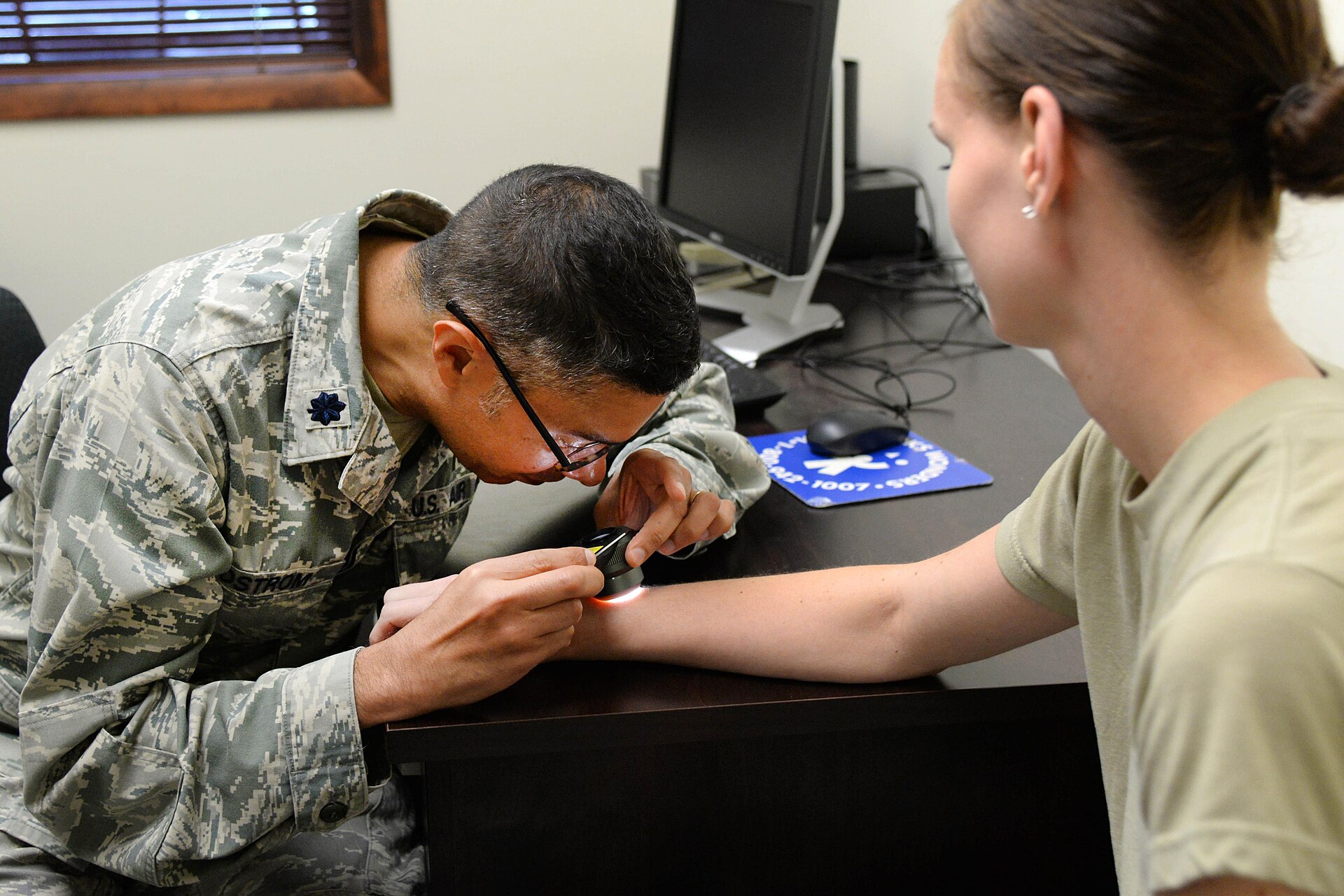
This article provides strategic analysis of health systems and is not medical advice. Featured photograph: Linda LaBonte Britt / US Air Force via Wikimedia Commons, a US government work in the public domain.